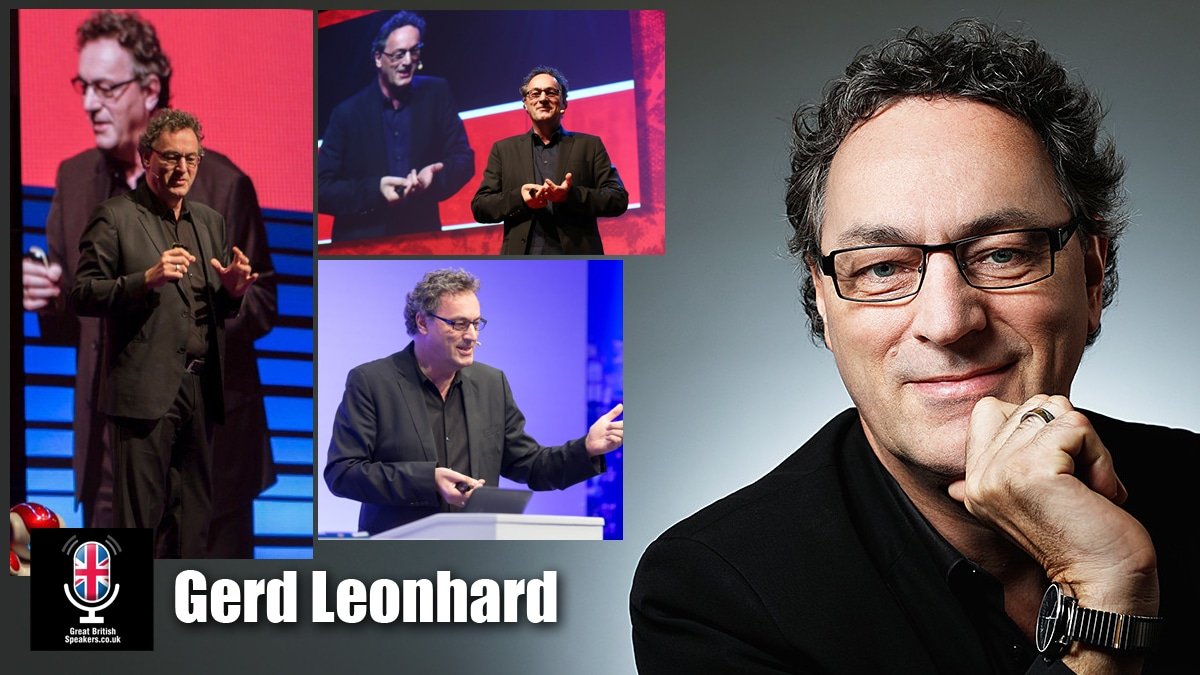
Gerd Leonhard Keynote Talks:
Gerd’s keynotes, speeches and presentations are renowned for their hard-hitting and provocative yet inspiring, often humorous and always personal motivational style. Gerd is highly regarded as a global influencer and has advised many business leaders and government officials around the globe.
Gerd Leonard talk delivery formats:
- On-location keynote in person and with customized visuals (30-60 min), Q&A or a speech without any visuals or media. ***Subject to Covid-19 travel restrictions.
- A virtual keynote via video, with customised background visuals (15-60 min), LIVE online format (slightly higher fee) or Pre-Recorded (slightly lower fee).
- A ‘Fireside-Chat with Futurist Gerd’ (no media, no presentation, conversation-style), hosted by a suitable and experienced presenter.
- A virtual panel or webinar participation (no speech, no presentation)
- Futurizing Seminars or Workshops for executive board future-coaching
- Virtual Advisory Session with Futurist Gerd
His current most popular keynote is BEYOND CORONA
The Beyond-Corona Future: what to expect in the next 3-5 years
Our world is being painfully but irreversibly rebooted by the Covid19 crisis – and we are not ‘going back to normal’. To many of us, this crisis may feel quite devastating but I think it also creates a very unique opportunity for what I call ‘The Great Transformation‘. Watch the latest keynote videos here. Have a look at my new Beyond Corona Topic Page (January 2021).
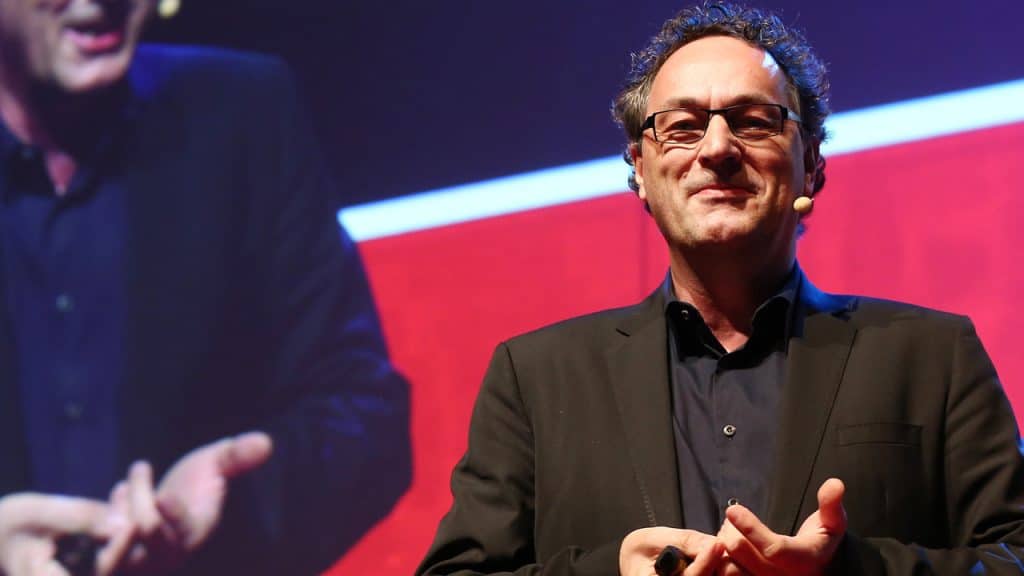
This keynote (usually held remotely) addresses topics such as:
- What have we learned from this crisis?
- The economic and business impact: the future of jobs, work, commerce and trade
- The geopolitical impact: Europe, the U.S. and China – new power structures? De-Globalisation?
- The future of capitalism: stakeholder value over shareholder value: finally, a sustainable capitalism?
- The environmental impact: how will this crisis impact climate-change action? How real is the ‘end of oil‘?
- The impact on medical & healthcare: entering warp-drive
- The societal impact: is technological domination and permanent surveillance next?
- The personal impact: fears and hopes, solidarity vs. opportunism, resilience vs desperation
- The impact on investing: where will the money go?
- The impact on education, learning and universities (and leadership)
- As you may have guessed, this keynote is usually held virtually i.e. as a digital keynote
Below is an excerpt from one of Gerd Leonhards post-COVID virtual talks
One of Gerd Leonhards most asked for talks ever is Technology VS Humanity…
In this groundbreaking new talk based on his book, Gerd addresses the “future shocks” that lie in wait for humanity as it tumbles into a world of Big Data / Tech / AI dominance. This impactful presentation at the intersection of technology and ethics will engage your audience way beyond their daily concerns, and challenge the very core of being human – our shared values, believes and desire for happiness.
This talk is an always-evolving continuation of Gerd’s best-selling new book, and explores the coming clash of machine and mankind in detail – one that will make all other ‘industrial revolutions’ seem like kindergarten. This is a classic keynote engagement for public events, large audiences spanning all corporate divisions and borders, as well as for executive client conferences.
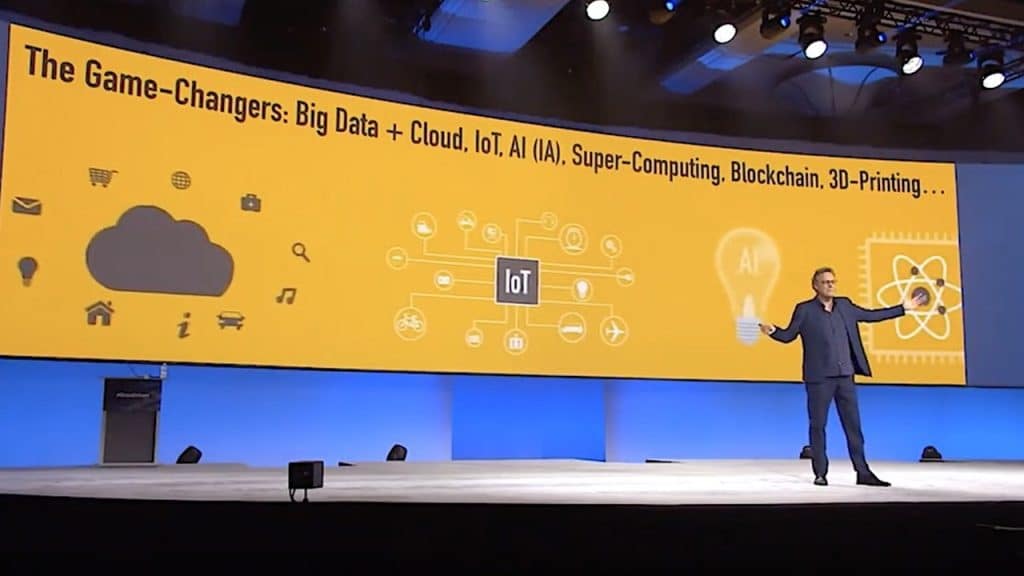
Technology is evolving exponentially, changing our world at a mind-boggling pace. Data is indeed the new oil, and AI is the new electricity. Science fiction is increasingly becoming science fact as we are entering the age of cognitive computing, thinking machines and AI, augmented and virtual reality, the Internet of Things, deep learning, bots and intelligent digital assistants. Will this be heaven or will this be hell? One thing is certain: The next 20 years will bring more changes than the previous 300 years.
Gerd Leonhard Other Current Keynote talks…
GERD LEONHARD: THE GOOD FUTURE – Why and how “People-Planet-Purpose and Prosperity” is the key to our Future
GERD LEONHARD: AWESOME HUMANS on top of Amazing Technology
The Future of Business, Commerce and Society, Work, Jobs and Education: Humanity will change more in the next 10 years than the previous 100 years
GERD LEONHARD: ‘SUSTAINABLE’ IS THE NEW ‘PROFITABLE’: TOWARDS A SUSTAINABLE SOCIETY AND ECONOMY
GREEN IS THE NEW DIGITAL
Why and how the decarbonisation of our economy is the biggest opportunity in this coming decade
GERD LEONHARD: UNDERSTANDING THE MEGASHIFTS
Transforming your organisation
GERD LEONHARD: HUMANITY AND TECHNOLOGY
We are defining our future, today!
GERD LEONHARD: CULTURE EATS TECHNOLOGY FOR BREAKFAST
How to Build Resilient, Agile and Creative Organizations!
2030: SCENARIOS AND FORESIGHTS
Our future could be hell or it could be heaven – it’s our choice!
GERD LEONHARD: ARTIFICIAL INTELLIGENCE
The next 10 years
GERD LEONHARD: A FUTURIST’S CASE FOR TECHNOLOGY REGULATION
Too much of a good thing can be a very bad thing- Watch this topic explode in 2021!
GERD LEONHARD: HAPPINESS IN THE DIGITAL AGE
NEW speaking topic
GERD LEONHARD: A NEW RENAISSANCE
HOT 2021 speaking topic
GERD LEONHARD: DIGITAL ETHICS
The ethics of exponential technological progress
GERD LEONHARD: THE TOP 10 THINGS YOU MUST KNOW ABOUT THE NEXT DECADE
The future belongs to those who can hear it coming!
GERD LEONHARD: THE FUTURE OF WORK, JOBS & EDUCATION
The automation of everything, the rise of smart machines and AI: what is the future work, jobs / employment… and education?
GERD LEONHARD: UNDERSTANDING THE FUTURE: A FUTURE MINDSET!
9 Game-Changers, 11 Megashifts and 6 Future-Principles
GERD LEONHARD: HOW TO DEAL WITH EXPONENTIAL CHANGE
The total transformation of business and society
All these topics are customisable and range from 15-90 minutes can include media or not and can be broadcast worldwide.
These numerous options affect Gerd’s fee structure so please ask for further details.
Gerd Leonhard Clients:
UBS, Mastercard, Unilever, Lloyds Bank, WWF, Nokia, The Guardian, Google, Sony, Telkom Indonesia, Siemens, RTL, ITV, BBC, France Telecom, Orange, Deutsche Telekom, MTN, The Financial Times, DDB, Ogilvy, Omnicom, IPG, The EU Commission, Mandarin Oriental Hotel Group, and VISA